Smart Factory: “Wherever there's data, there's KEB”
Interview with Markus Weissensteiner, Managing Director of KEB Automation Austria
Smart factories are more than just a trend today. Rather, they represent the future of production processes. In this interview, Markus Weissensteiner, Managing Director of KEB Automation Austria, explains the potential offered by intelligent and highly networked production environments and talks about the key role played by the open automation platform NOA in this context.
What characterises a smart factory?
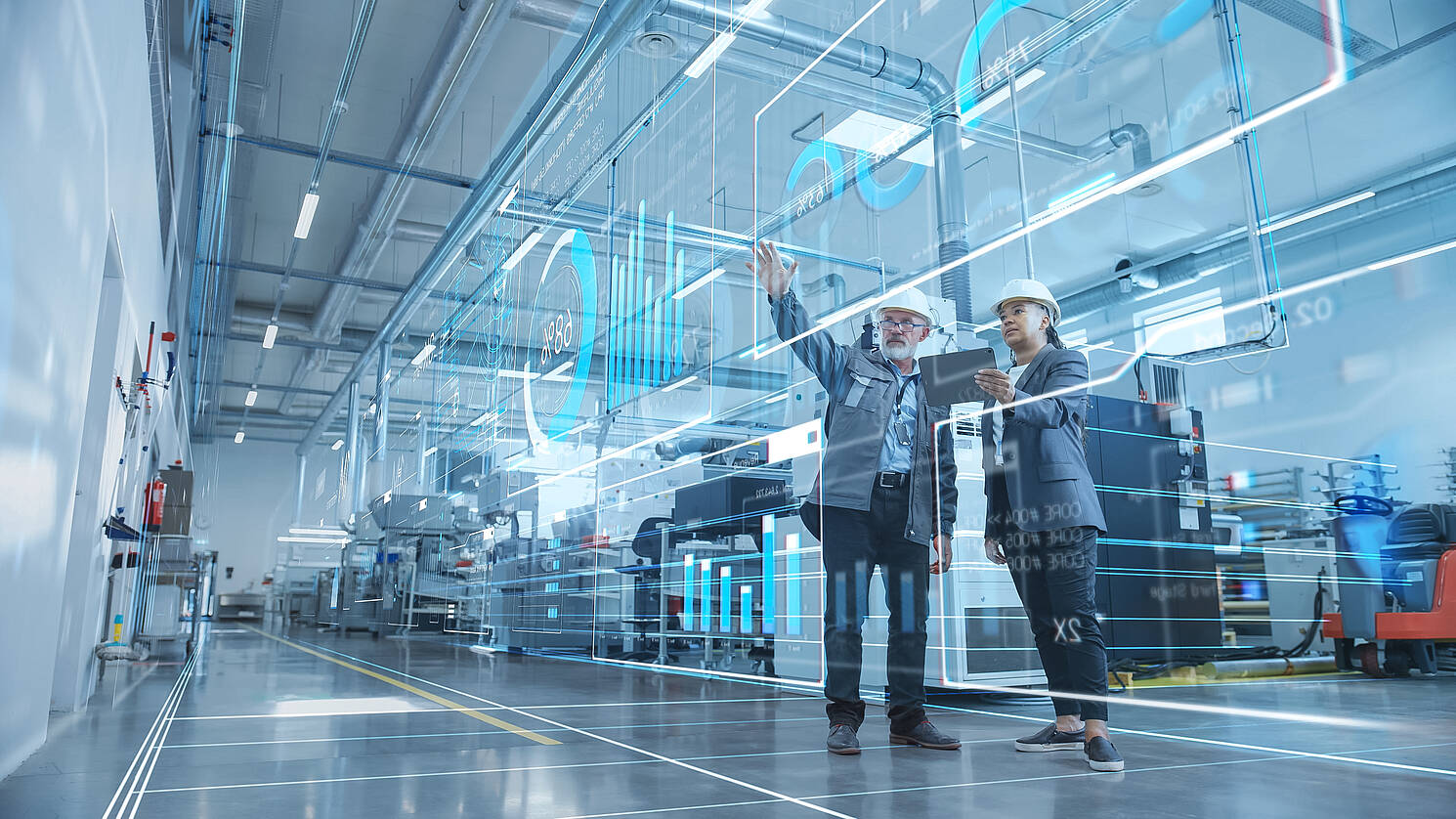
Weissensteiner: Nowadays, we hear about Industry 4.0 in a wide variety of contexts. What exactly this means in practice and what opportunities it offers becomes clear in a smart factory. The smart factory stands for an intelligent and highly networked production environment. Machines, products and systems communicate with each other in real time, enabling the fusion of digitalisation and manufacturing. This means that rigid processes are replaced by dynamic, learning systems. Ideally, this results in a factory that organises itself, detects errors at an early stage and responds flexibly to new requirements. The key to this type of factory is data and exploiting the opportunities offered by the Industrial Internet of Things (IIoT). I think it is important to understand that a smart factory is less of a pure production site in the traditional sense and more of a digital ecosystem in its own right. An ecosystem that optimises data-based decision-making and opens the door to faster innovation.
What is the biggest potential of intelligent networking?
More than ever, the efficiency of processes is crucial to a company's competitiveness. Intelligent networking makes production processes transparent. This means that everyone involved knows at all times what processes are taking place in their own halls – and that is precisely what is needed to optimise planning and reduce waste of resources and redundancies in the process. This not only reduces costs, but also ensures greater flexibility, which is particularly advantageous in the area of batch size 1 or small series. By analysing and utilising data, production times can be predicted more accurately, which can lead to greater delivery reliability. Procurement processes and warehousing costs are optimised, and product quality remains at a consistently high level in automated production.
What role does KEB play for plant and machine builders in this context?
KEB offers a complete package for smart automation in numerous areas of application. Our NOA automation platform is particularly worthwhile for smart factories. NOA is a toolbox that users can use to design their own automation solutions based on open systems. The platform is designed especially for small and medium-sized enterprises, works independently of hardware and can be expanded with the user's expertise or through the integration of third-party providers. With NOA, data within a smart factory becomes usable, for example in the form of condition monitoring. The tool also automatically monitors machine and process data and can reduce machine downtime through predictive maintenance. Integrated device and fleet management allows all devices to be managed centrally in one place, and remote maintenance provides access to expert know-how regardless of location. HELIO, an HMI management system that can be integrated into NOA, is available for data visualisation. All in all, it can be said that where there are machines, there is data. And wherever there's data, there's KEB. In this way, we can help users get the most out of their data, laying the foundation for a smart factory.
What obstacles must be taken on the way to a smart factory?
The transformation of a company into a comprehensive digital ecosystem is complex. In production, you usually find both new and old machines. This also means differences in the availability of machine data. KEB therefore focuses its portfolio on components that work with various interface standards in order to achieve harmonisation between old and new machines. Data security is also an important and challenging issue. Networked production environments can be a gateway for cyber attacks, which is why special efforts are required to establish reliable protection. There is certainly also a psychological component: there are still concerns today about how a smart factory works. It is therefore important to get stakeholders on board at an early stage and show them that the path to networked production is worthwhile – even if, of course, investments are necessary at the beginning.
How do you rate the current prevalence of smart factories in plant and machine engineering?
Based on the increasing demand for our NOA automation platform, we can see that data usage is no longer a nice-to-have, but a must-have for mechanical engineering. This is also gradually being reflected in the establishment of smart factories. At KEB, we support users on their way to this goal. With the HMI management tool HELIO, for example, we offer a particularly practical solution for data visualisation. The key feature here is that no programming knowledge is required. This sets free resources so that developers can devote themselves to other projects – an important factor in times of skilled labour shortages.
How should users proceed who are still at the very beginning of intelligent production networking?
First of all, it should be clear that a smart factory does not happen overnight. Rather, it is a process in which you should first define your goals and assess the status quo in production. Smaller pilot projects for selected use cases can then follow. One example of this would be the implementation of predictive maintenance with NOA. Subsequently, NOA can be established as a comprehensive platform for processing real-time data, for example. At the same time, it is important to train employees and initiate an internal cultural change that promotes openness to new technologies. At KEB, we are happy to answer any questions you may have about the use and visualisation of machine data at any time in a direct exchange.