"We felt – and still feel – that we are in good hands with KEB and HMI Project, and we received personalized support during the implementation of the visualization"
Stefan Schedlik, Technical Director, ECON
System solutions for industrial automation from a single source: KEB Automation provides plant and machine builders with tools that not only capture and analyze machine data but also visualize it with ease. On this page, learn how our open automation platform NOA and the HMI management tool HELIO have already proven their worth in real-world applications. We’ll also show how NOA and HELIO integrate into complete system solutions from KEB, ranging from controllers to drive controllers to (gear) motors.



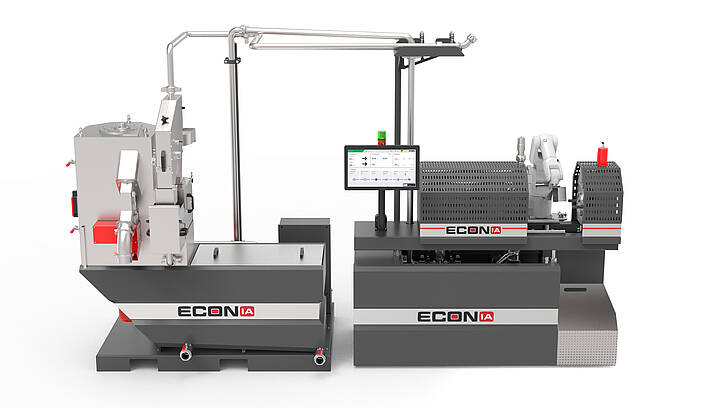
ECON specializes in underwater pelletizing systems for the plastics industry. Founded in 1999, the Austrian company develops energy-efficient solutions featuring patented thermal insulation technology that enables the pelletization of materials that would otherwise be difficult or impossible to process. Thanks to its patented thermal separation, the system can reliably process plastics with high temperature requirements or high filler content, as well as materials with very high melt flow rates.
Through continuous technical development, ECON has secured its position as an innovation leader in the field of pelletizing systems, relied upon by masterbatch manufacturers, compounding companies, and recycling firms, among others. ECON places great emphasis on maximum operational reliability in its machines. Ease of use is also a key focus – and this is precisely where KEB Automation’s HMI solution comes into play.
ECON supplies customers around the world with underwater pelletizing systems. Customer specifications vary from country to country when it comes to the control systems to be used. If a particular market relies on a control system from Manufacturer A, then a visualization system from Manufacturer A is also required. In another market, however, the situation is quite different. The result: a wide variety of visualization systems, all of which must be maintained and further developed. This creates a need for in-house programmers or costly external service providers to implement the different HMIs in different programming environments. It is precisely this extra effort that should be eliminated.
It was also important to ECON that there be a uniform visualization. It should be clearly recognizable that the HMI was designed by ECON. And there’s a specific reason for this: ECON has branches in the U.S., China, and India. There, the company delivers a standard solution right up to commissioning. If the local customer has specific requests, ECON technicians on site adapt the system accordingly, which is why, until now, many different HMI designs have been in operation worldwide. Here, it was crucial for ECON to create a technically compelling interface that works in everyday practice.
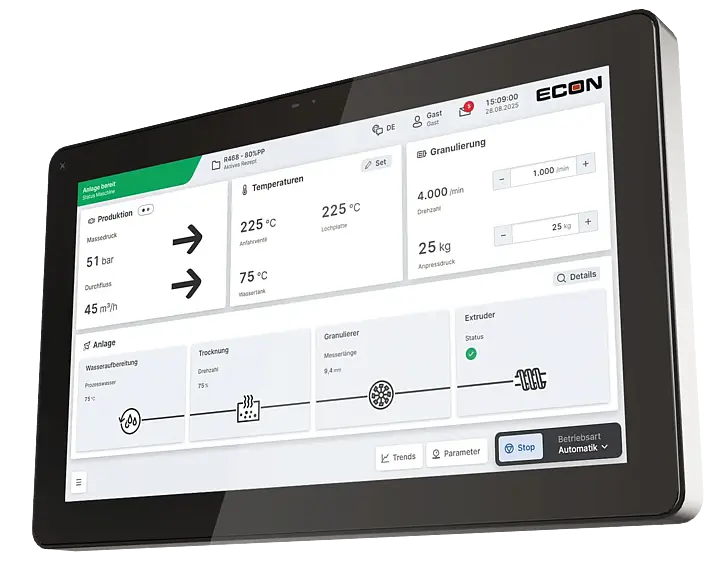
The HMI Management Tool HELIO from KEB Automation and HMI Project was used for these tasks. First, a comprehensive UX analysis was conducted at ECON, the user interface was redesigned, and the changes were implemented using HELIO.
The advantage of HELIO: From now on, ECON will need only a single visualization that can communicate with all controllers. This is achieved through the open automation platform NOA, which ensures connectivity to various controllers. It also eliminates the need to create different visualizations – including operating manuals and documentation. With the introduction of HELIO, ECON now has a standardized HMI design. In the future, programmers will no longer design the visualization on their own; instead, there will be a company-wide design template. However, flexibility will still be maintained – for example, if a programmer wants to add specific pressure or speed values tailored to a customer’s needs.
With the NOA Connection, ECON can now connect the desired controller with less effort. This provides ECON with a powerful all-in-one automation package. The remote maintenance function via dedicated VPN remote maintenance routers or a panel is also very practical.
Using HELIO is also so simple because no programming knowledge is required. Whereas in the past it was necessary for a programmer to provide text that was then edited by the technical writing team, HELIO already provides all of this, allowing the technical writing team to create the HMI independently.
What exactly does the HMI solution with HELIO look like at ECON?
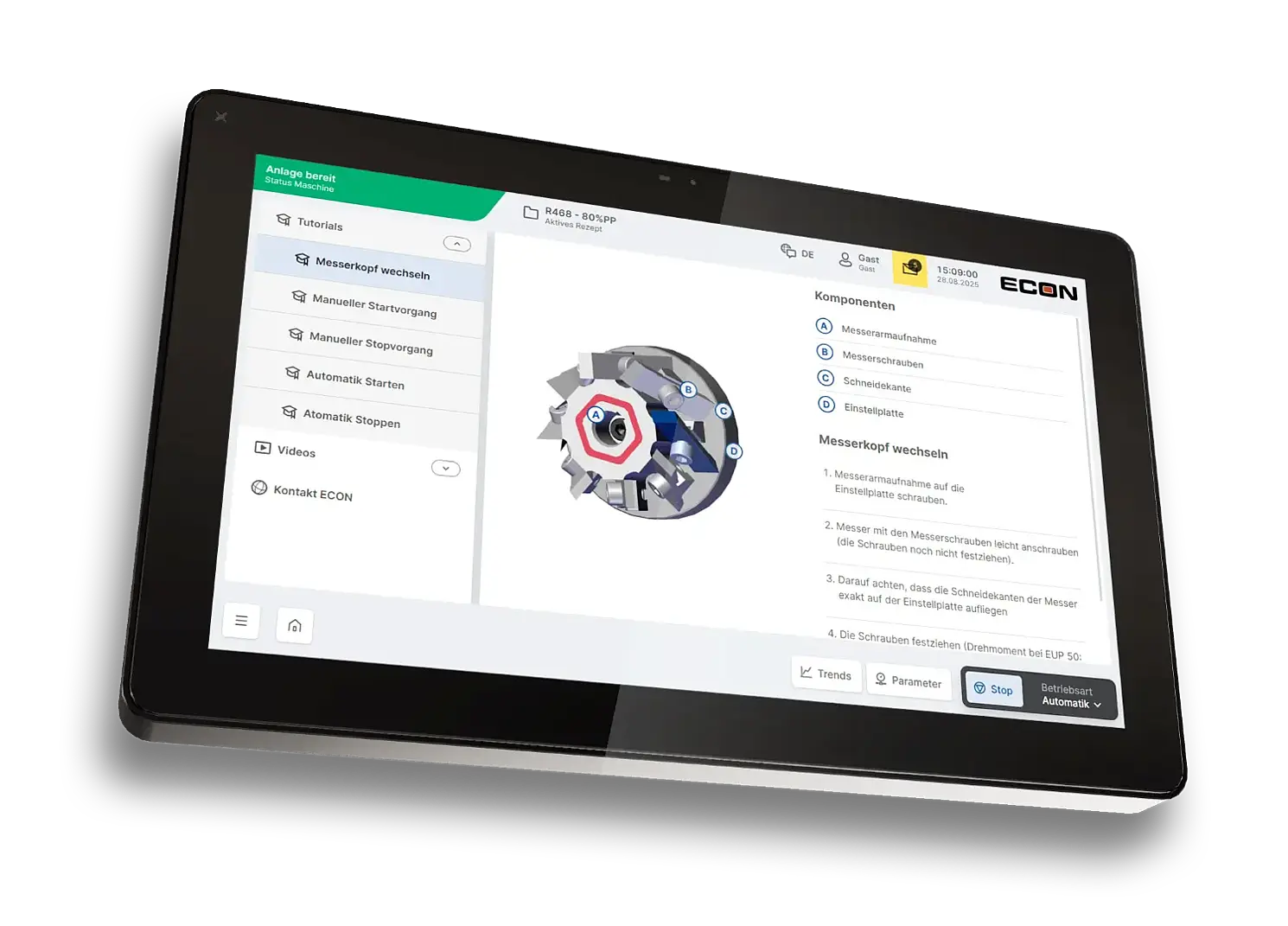
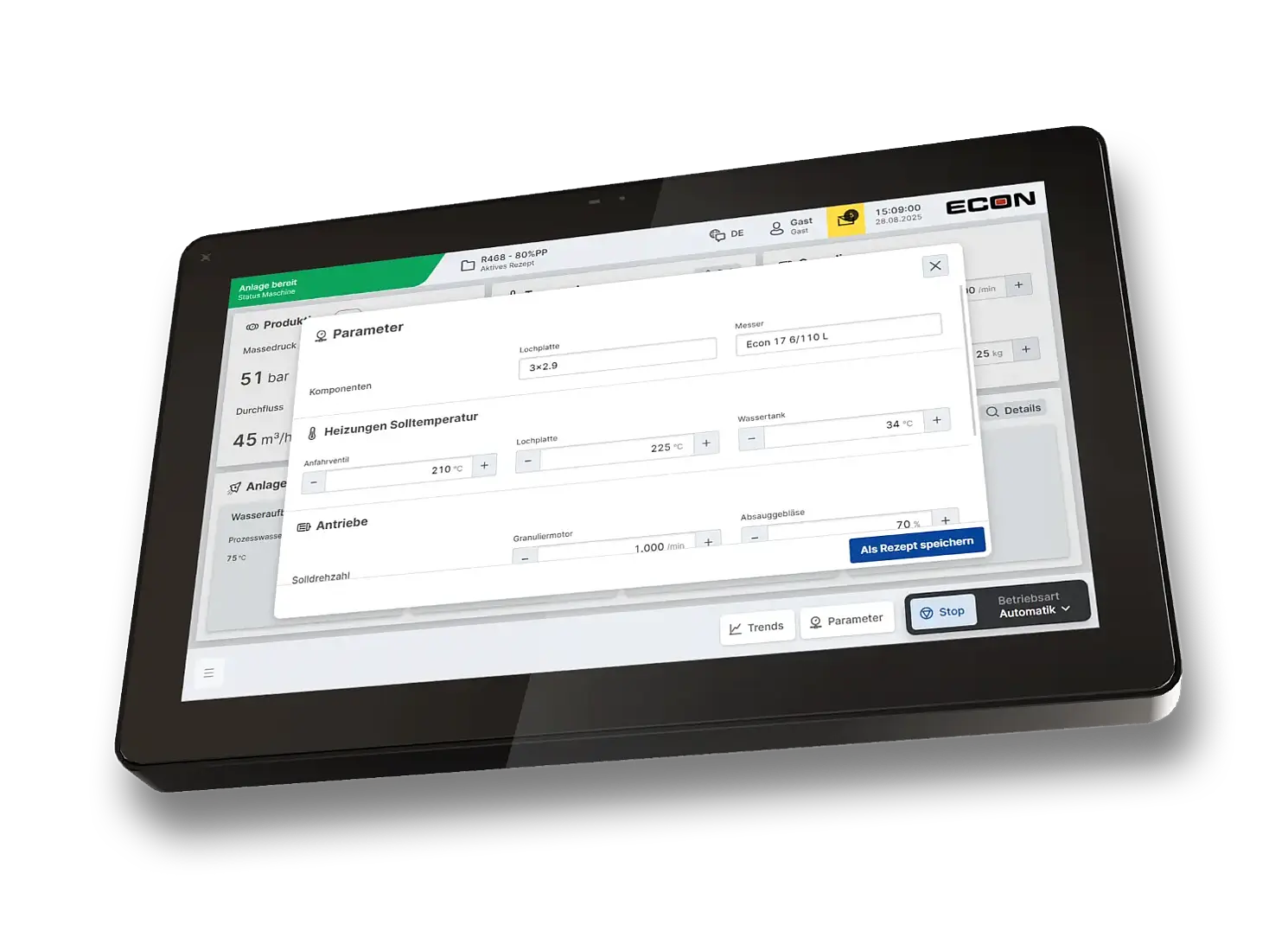
At ECON, the visualization of machine data is kept simple and clear. Particularly relevant data is displayed on the main screen in a way that’s easy to read, even from a distance. From here, machine operators can access all important functions with just one click. HELIO’s dynamic display proves to be especially practical here. It ensures that machine operators are shown only the information that is relevant to them individually. Various recipes can be easily created in HELIO, and the tool handles recipe management, thereby reducing the workload on the control system.
Instructions are available directly in HELIO for operators who have had little experience creating HMIs so far. Experienced users also receive support, including for maintenance and servicing tasks that are performed less frequently. Throughout the development of the new HMI for ECON, the user was always the focus – whether during analysis, prototyping, or testing of the HMI. HELIO’s modular architecture enables ECON to make company-specific customizations quickly and easily.

Stefan Schedlik, Technical Director, ECON
With HELIO, ECON now has a way to create standardized HMIs in no time at all. A key feature is that the HMI Management Tool integrates into a KEB system solution comprising hardware, software, and design. Even before the implementation of HELIO, ECON and KEB had been collaborating in the areas of frequency inverters and motors. As a result, the granulation systems were already familiar to both companies, and the implementation of the new HMIs could begin promptly.
The integration of software and hardware is evident, among other things, in the fact that HELIO will run on KEB’s C6 E32 panel PC in the future. This is an innovative web-based HMI with a slim design. Equipped with a capacitive multitouch screen, the HMIs are available in sizes ranging from 7“ to 21.5”. The panels can be easily installed outside the control cabinet. This makes it possible to place the visualization of information and machine controls exactly where users need them.
HELIO is directly linked to NOA, KEB’s open automation platform. Via the NOA Connection, HELIO is connected to the machine’s controller and can access it flexibly. The NOA OPC UA Server makes individual data packets available to upstream and downstream machines. The S7 Connector, which connects the edge device to an S7 protocol controller, is also part of the overall solution for ECON. A connector is also available for the Common Industrial Protocol (CIP), providing a high degree of flexibility in selecting appropriate controller vendors.
Vion Solutions was founded in 2024 and helps companies digitally transform their manufacturing processes. Ready-to-use automation, robotics, and digitalization solutions are the core business of the Austrian company.
Vion has implemented a fully automated order-picking system for its client. The client supplies specialty retailers in the shortest possible time and relies on highly automated production, in which the vast majority of products are manufactured and packaged entirely without human intervention.
Such processes are complex and require tools that take operational connectivity to the next level.
Within the order-picking system, various logistics processes must be controlled. In addition, different control systems must be linked to one another and to the IT infrastructure. To design the system as efficiently as possible in this context, the visualization of system data is essential. Easy-to-use HMIs allow the system’s status to be monitored quickly and conveniently, errors are detected early, and downtime is reduced. Furthermore, operational and process safety can be enhanced, as critical conditions are clearly identifiable. Intuitive operation ensures greater user-friendliness – even with complex machine data.
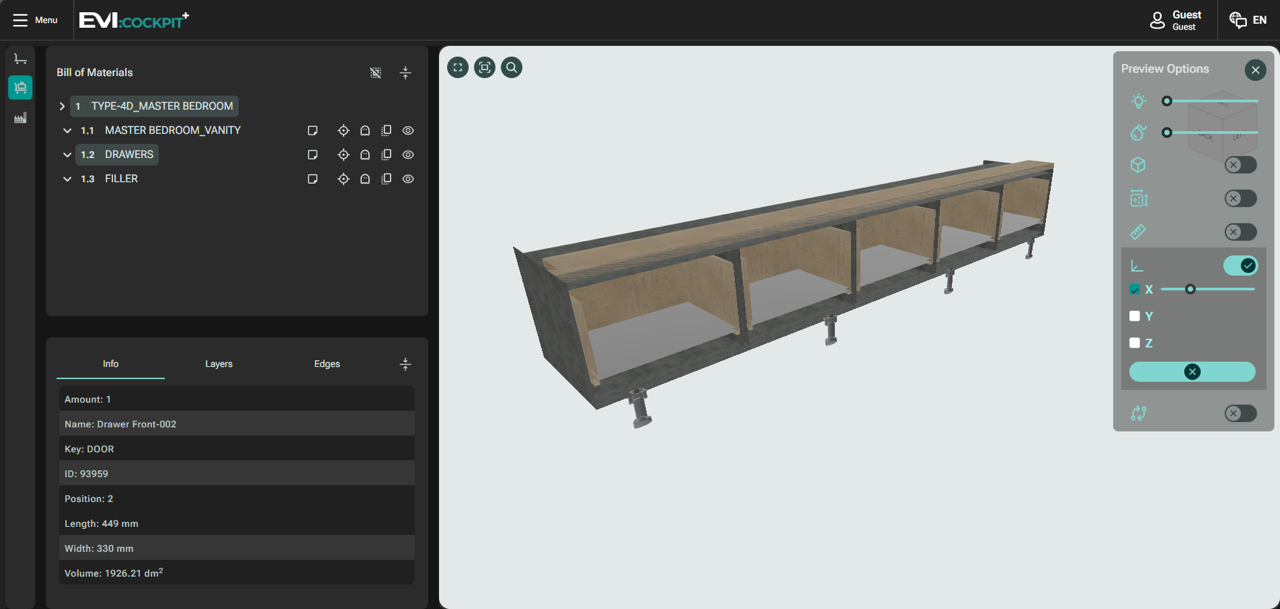
To ensure that all processes in the fully automated logistics application mesh seamlessly, it was important for vion to be able to coordinate the material flow throughout the entire plant and to network various OT components with one another. A non-file-based database, as well as the ability to update and query product information within the database, were also to be implemented. Furthermore, it was important for the application to visualize the various drawer and pallet levels.
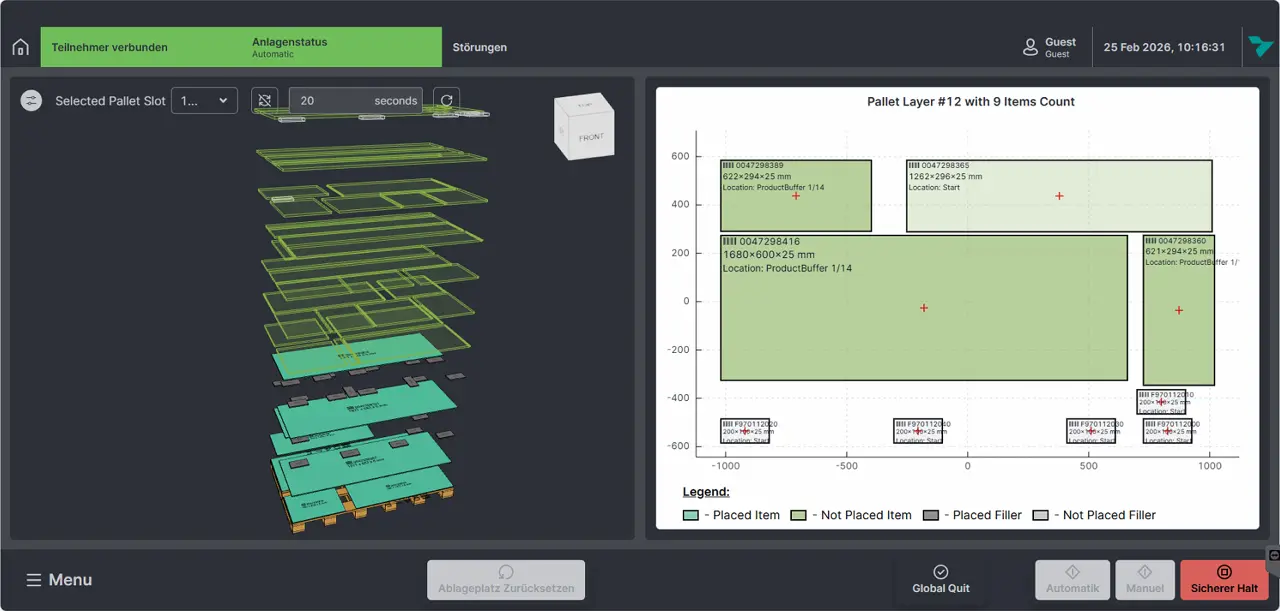
A solution for visualizing the data from the order-picking system was quickly found: With HELIO, KEB and HMI Project have provided an innovative HMI management system. This allows customers to create web-based HMIs in no time at all – HMIs that are truly responsive and independent of platforms and end devices. A practical advantage is that HELIO handles the UX design for the user. HELIO has quickly established itself at vion and will continue to be the tool of choice there for MES systems (software solutions for real-time planning and control in manufacturing), software development, and plant projects. The cost factor also speaks in favor of using HELIO, as developing a comparable framework in-house is costly and not feasible for many companies. Thanks to the Software Development Kit (SDK), users also have the option to make their own software-based customizations, which leads to greater flexibility and independence.
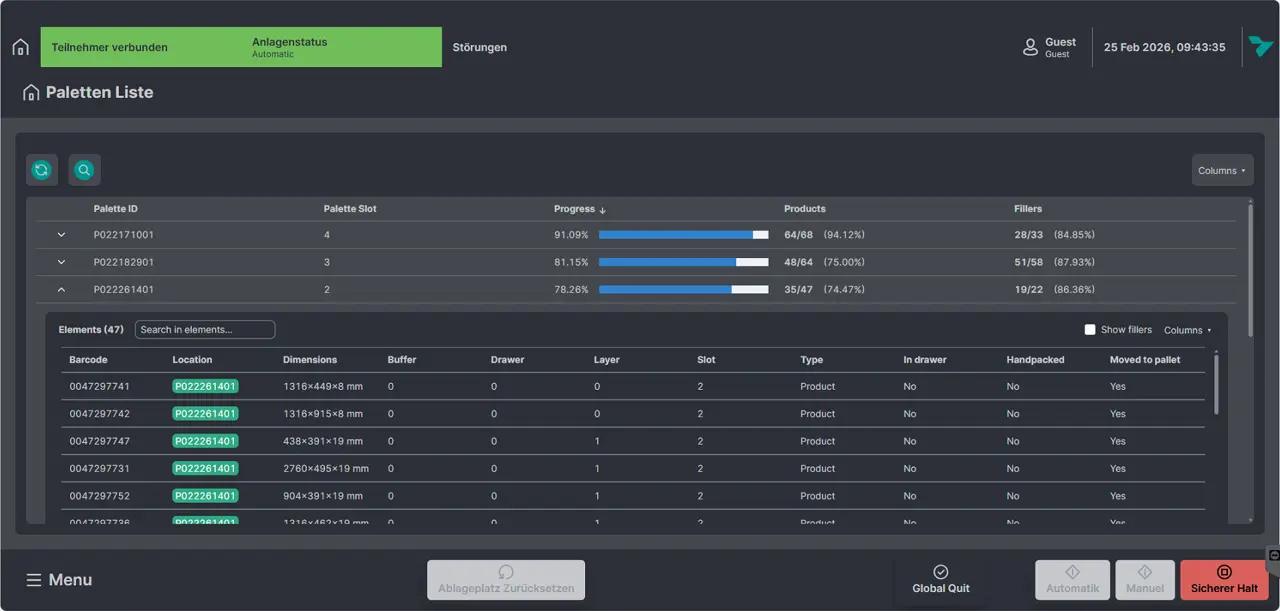
At Vion, HELIO is used as an app within the NOA automation platform. In addition, standard NOA apps and NOA customer apps have been implemented. These include, among others, the DataExplorer app, which manages approximately 30,000 parameters from a wide variety of sources. Vion also used these apps to automate the order-picking system:
Database Service (customer app), which hosts a PostgreSQL database for products and pallets and is accessible via PLCs and IT services
Codesys Communication for integrating the KEB C6 E22 IPC
Datamapper with 1,200 mappings (2,400 symbols) throughout the entire plant
Device telemetry, which displays the CPU utilization of the E22 IPC for diagnostic purposes
Through the NOA OPC Client and Datamapper, NOA enables the interconnection of the process control and automation technology used by vion. The NOA Database Service ensures connectivity between IT and OT as well as the proper functioning of the database. The coordination of material flow throughout the plant is handled by Codesys Control. Based on NOA’s functionalities and its integrated apps, vion was able to implement an efficient intralogistics solution that ensures smart processes and enables particularly easy operation.

Andreas Stummer, CEO, vion solutions
NOA is just the beginning at Vion: As a system provider, KEB creates complete solutions ranging from IIoT through the control level all the way to the motor. In addition to the open automation platform NOA and the HMI management tool HELIO, vion also relies on, among other things, the C6 E22 IPCs – fanless industrial PCs designed for operating temperatures of up to 50 degrees and available in panel, box, or book-mount configurations. In this specific application, the C6 E22 IPC connects a total of nine robots and control systems. With the COMBIVIS Control Runtime variants BASIC/PRO/ADVANCED, the C6 E22 is ideally suited for motion applications with real-time requirements in the mid-performance range. Additional software features, such as visualization, OPC UA, or remote maintenance, can be integrated.
The compact COMBIVERT S6 Servo Drives from KEB provide the right drive solution for intralogistics applications. The drives are characterized by precision and maximum repeatability, as well as safety technology that is directly integrated into the unit. Whether encoderless or with an encoder, the S6 can control a wide variety of motor technologies. This includes the servo gearmotors from KEB, which vion relies on in its applications. The motors are ideal for dynamic tasks and offer impressive power density. The direct connection to the gearbox results in very compact and space-saving servo gearmotors, as a motor adapter is not required.
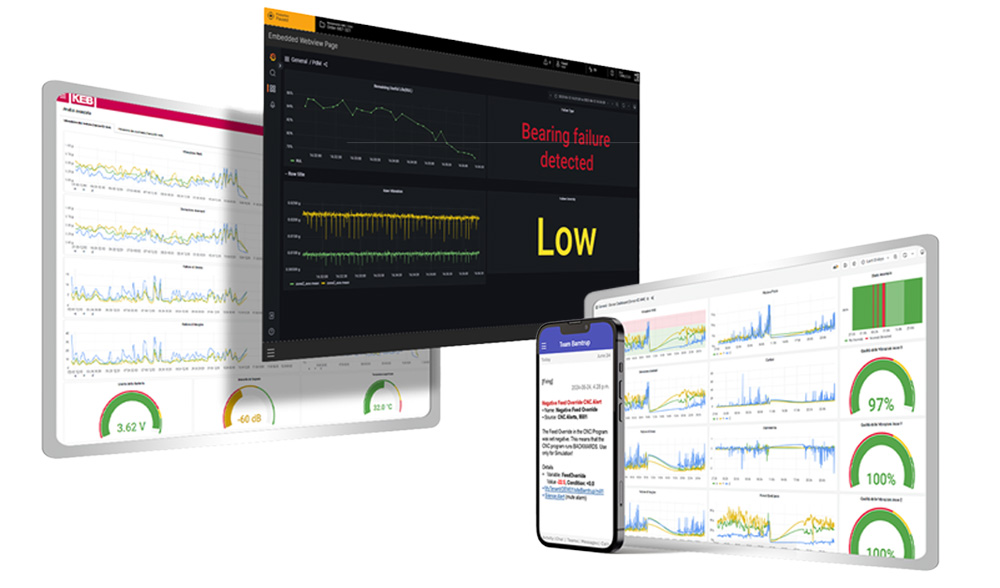
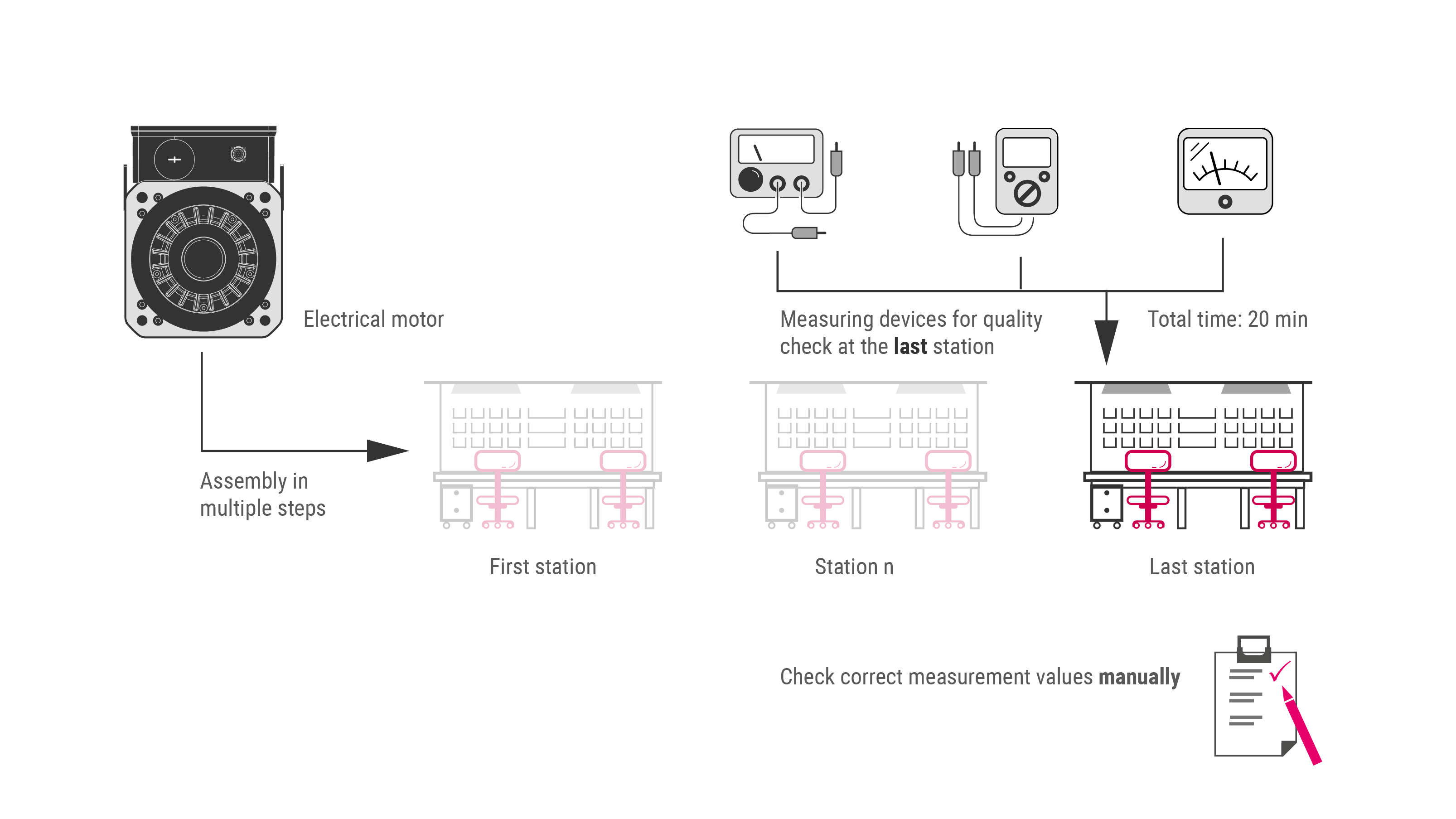
Brusatori Motors is an Italian manufacturer of electric motors based in Milan and part of the KEB Group since 2022. In particular, the company produces asynchronous, servo and torque motors for a wide range of applications. A key part of the manufacturing process is the final quality inspection of the motors. Until now, however, this had been carried out mainly manually. Measurement values were recorded by staff and compared with the specified limit values.
This approach meant that faults or deviations were often only detected at the end of the assembly process. Defective motors had to be sorted out or reworked, which resulted in additional time and costs.
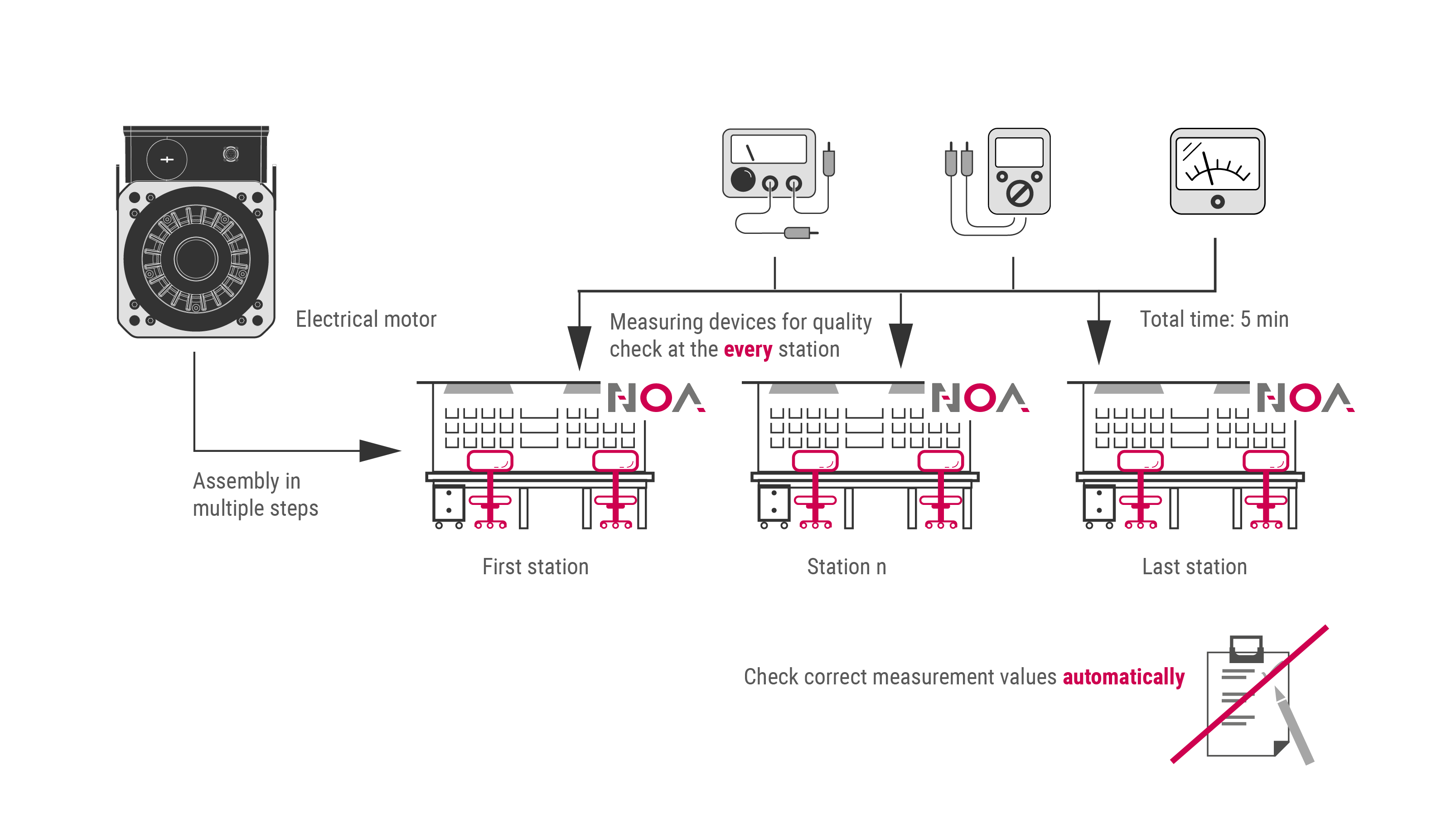
Brusatori aimed to make the quality inspection significantly more efficient and to detect faults during the assembly process itself. The objective was to integrate the inspection steps directly into the individual assembly stations, rather than carrying out the checks exclusively at the end of the process.
Furthermore, the previously manual evaluation of the measured values was to be automated. Staff needed to be able to compare measurement results immediately with the stored limit values in order to quickly determine whether a motor met the quality requirements. At the same time, the overall test duration was to be significantly reduced and the manufacturing process made more cost-effective.
The solution was implemented using KEB’s open automation and IIoT platform, NOA (Next Open Automation). Each assembly station utilises a setup comprising a C6 COMPACT 3 Edge Device and four connected measuring instruments.
To facilitate communication between the measuring instruments and NOA, Brusatori developed its own apps, which were integrated into the customer-specific app catalogue. In addition, a database app was implemented to manage all threshold and limit values for the various motor variants. This app automatically compares measured values with target values, thereby replacing the manual comparison with printed data sheets that was previously required.
A CSV export app is used to document the tests. The processes are visualised via HELIO, the HMI management tool from KEB and HMI Project. Staff can use it to start tests, view results and immediately see whether a motor meets the quality requirements.
The new automated quality control process for the motors begins with the scanning of a QR code, which identifies the specific motor variant. The measuring instruments are then connected and the quality test is initiated directly via HELIO. The recorded measurement data is automatically compared with the stored limit values. The result is displayed immediately, ensuring that only approved motors proceed to the next stage of production.
Thanks to this automation, Brusatori has been able to reduce the test time from 20 minutes to just five minutes. At the same time, faults are detected much earlier, which has eliminated bottlenecks in the quality inspection process and reduced scrap. The solution took just two weeks to implement.

Marco Sala, Managing Director of Brusatori Motors
The solution at Brusatori demonstrates the strengths of NOA as an open automation platform. The architecture enables the integration of customer-specific applications and proprietary logic. This allowed Brusatori to develop its own apps for connecting the measuring devices and to avoid the need for additional automation components.
The entire solution is based on NOA Core and is operated entirely on-premises, without a cloud connection or the NOA Portal. The combination of NOA, the C6 COMPACT 3 Edge Device, custom apps, database functions and HELIO forms an end-to-end system solution for the automated quality inspection of electric motors. The result is a flexibly scalable platform that speeds up assembly processes, automates quality assurance and, at the same time, lays the groundwork for future optimisations.

Our experts will be happy to advise you on selecting the suitable configuration and implementing it in your machine.
Contact Us Now