From Geared Motors to Jerseys
This drive sets textile machines in motion
Before fabric is transformed into garments or other textiles, the material goes through numerous processing steps. Whether in the bale opener, the cleaner, the preparation stage for yarn production during winding, twisting, warping, or the final weaving or knitting: textile machines are at work every step of the way, from the thread to the finished product. Well-designed system solutions from KEB Automation ensure that the machines operate reliably in continuous service. What sets them apart is the customization of the drive. A textile machinery manufacturer that relies on KEB gearmotors has also seen the benefits firsthand.
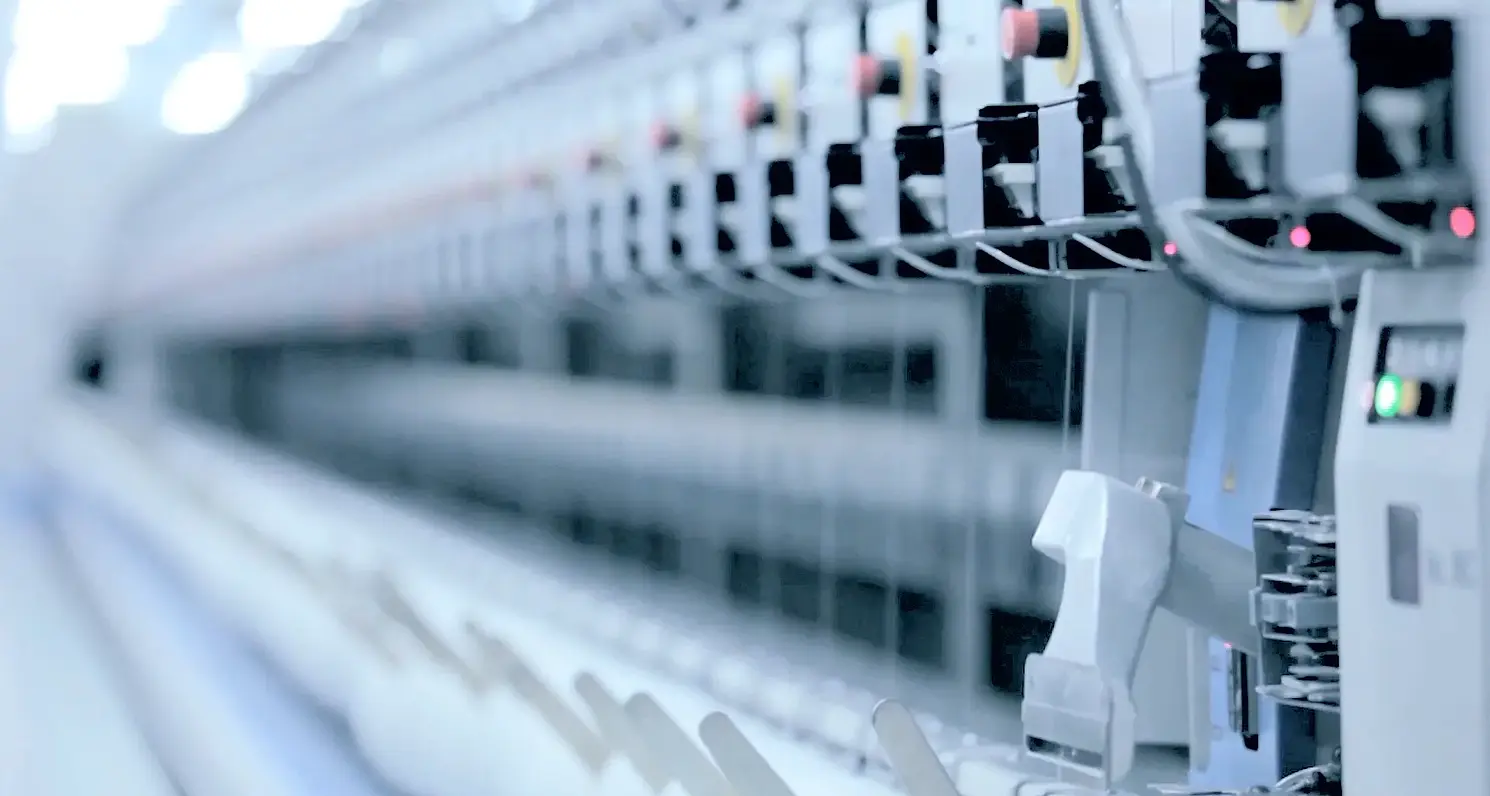
KEB has been collaborating with plant and machine builders in the textile industry for a long time. Through direct points of contact and collaboration on an equal footing, automation and drive solutions that meet individual requirements are identified in the shortest possible time. This was also the case for a customer whose core competencies include knitting machines, technical textiles, and synthetic fabrics such as jerseys. The requirements for the drive to be used here were quickly defined: In addition to high machine safety and easy operation, the reliability of the drive is of paramount importance. This is because the machines often run almost continuously for several decades. The machine comes to a standstill only during material changes or when the fabric is transported further.
Against this backdrop, high-quality drive components are indispensable, which is why the machine manufacturer opted for worm gear motors manufactured at the KEB motor plant in Schneeberg, Saxony. The gear motors are used in the knitting machines alongside induction motors and impress with their high gear ratio, compact design, and robustness.
“The worm gearmotors deliver up to 4 kW of motor power and are designed to be operated with variable-frequency drives. In this specific case, our customer is using a wider range of gearmotors. Our modular design makes this possible,” says Daniel Lehmann, Head of Sales and Marketing at KEB Antriebstechnik.
Good to know
What are the advantages of a worm gearbox?
Worm gearboxes from KEB achieve gear ratios of 1:40 or higher and are valued in many applications for their self-locking properties. Thanks to their right-angle design, they can be easily integrated even in confined spaces. A distinctive feature is the bronze worm wheel, which ensures durability and thus enables high efficiency.
The modular design provides users with maximum flexibility. This is more important than ever given the rapidly changing market requirements in the textile industry. Among other things, a special motor winding for inverter operation was implemented for the customer, and specific gear components were developed for the worm gearboxes that were precisely tailored to the machine’s requirements. In addition, there are numerous other specifications that can be customized. Lehmann: “Whether it’s low power ratings, special windings and gear ratios, gearmotors in various designs with different sensors, or the orientation of the individual connections – our customers don’t have to compromise when selecting the right gearmotor.”
Another advantage is that KEB has a high degree of vertical integration in the motor sector, ensuring short response times. Furthermore, the portfolio includes components tailored to the gearmotors, such as drive controllers or brakes, enabling the company to offer high-performance system solutions – all from a single source. Personal interaction ensures that KEB understands the customer’s applications and can provide the best possible advice based on this understanding. Ultimately, this creates win-win situations. In the past, custom-designed system solutions for the textile machinery manufacturer have, in some cases, become standard offerings at KEB. And when the drive solutions are delivered to the customer as part of a series, the customer benefits from fast delivery times.
