How this sensor prevents machine downtime
Predictive maintenance through vibration monitoring in NOA
Unplanned downtime of machines and plant equipment disrupts production processes and costs time and money. Predictive maintenance is the ideal solution to prevent exactly this. For this purpose, KEB provides a vibration monitoring solution within the NOA automation platform that detects problems before they even arise. Until now, wireless sensors have been the primary option for implementation. However, for even greater choice and higher performance, particularly in harsh environments, plant and machine manufacturers will now also be able to use wired sensors.
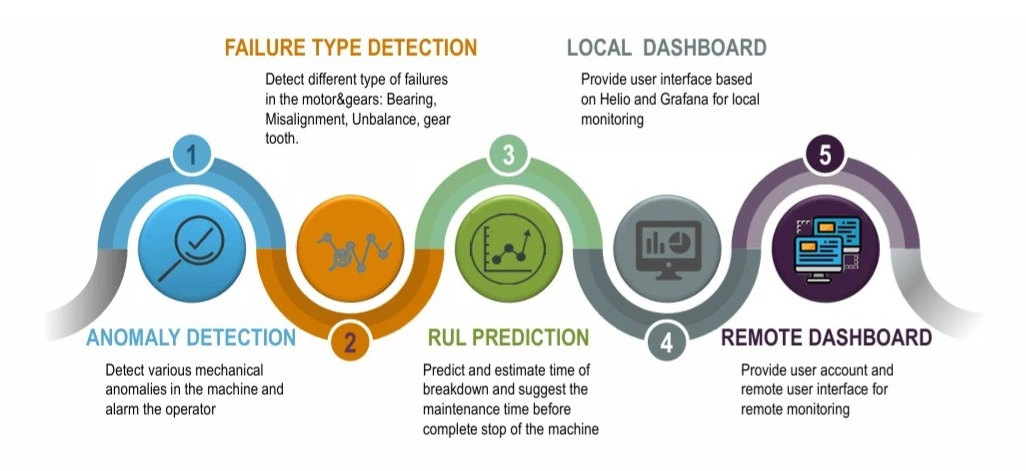
Different maintenance methods are suitable for different applications. Whilst reactive measures are often sufficient for non-critical components, preventive maintenance measures are necessary in other cases. Predictive maintenance represents a further category that uses data analysis to predict potential machine failures before they occur. Furthermore, maintenance work can be reliably planned in advance. The predictive maintenance function is based on a sophisticated algorithm that continuously records and analyses vibrations in the plant or machine. As a result, issues such as wear, imbalance or incorrect settings are detected in good time and can be rectified. Convenient for users: predictive maintenance is available as an app within KEB’s open automation platform NOA.
How vibration analysis works
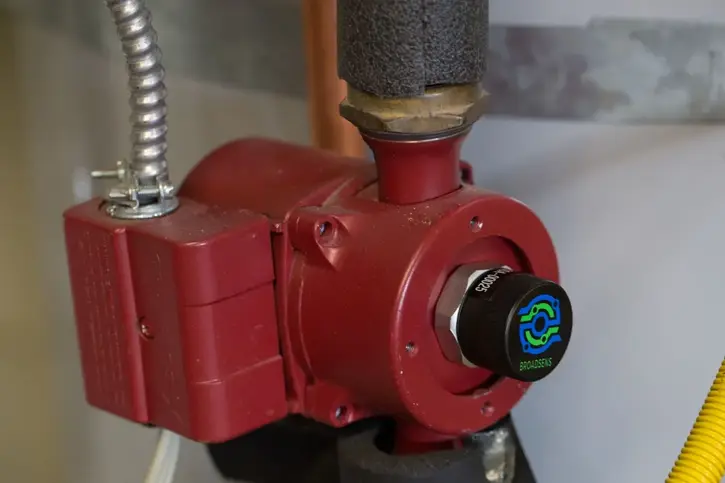
The starting point for the analysis are sensors that monitor the motor’s oscillations or vibrations along the X, Y and Z axes. To this end, the vibration sensors are mounted at strategic points on the motor housing to capture real-time data across multiple axes. The sensors operate in ambient temperatures ranging from -40 to 85 degrees Celsius and have an IP67 protection rating. The vibration data captured by the sensors is transmitted via Bluetooth to a central receiver: the network gateway device acts as a system hub and then processes and manages the incoming data.
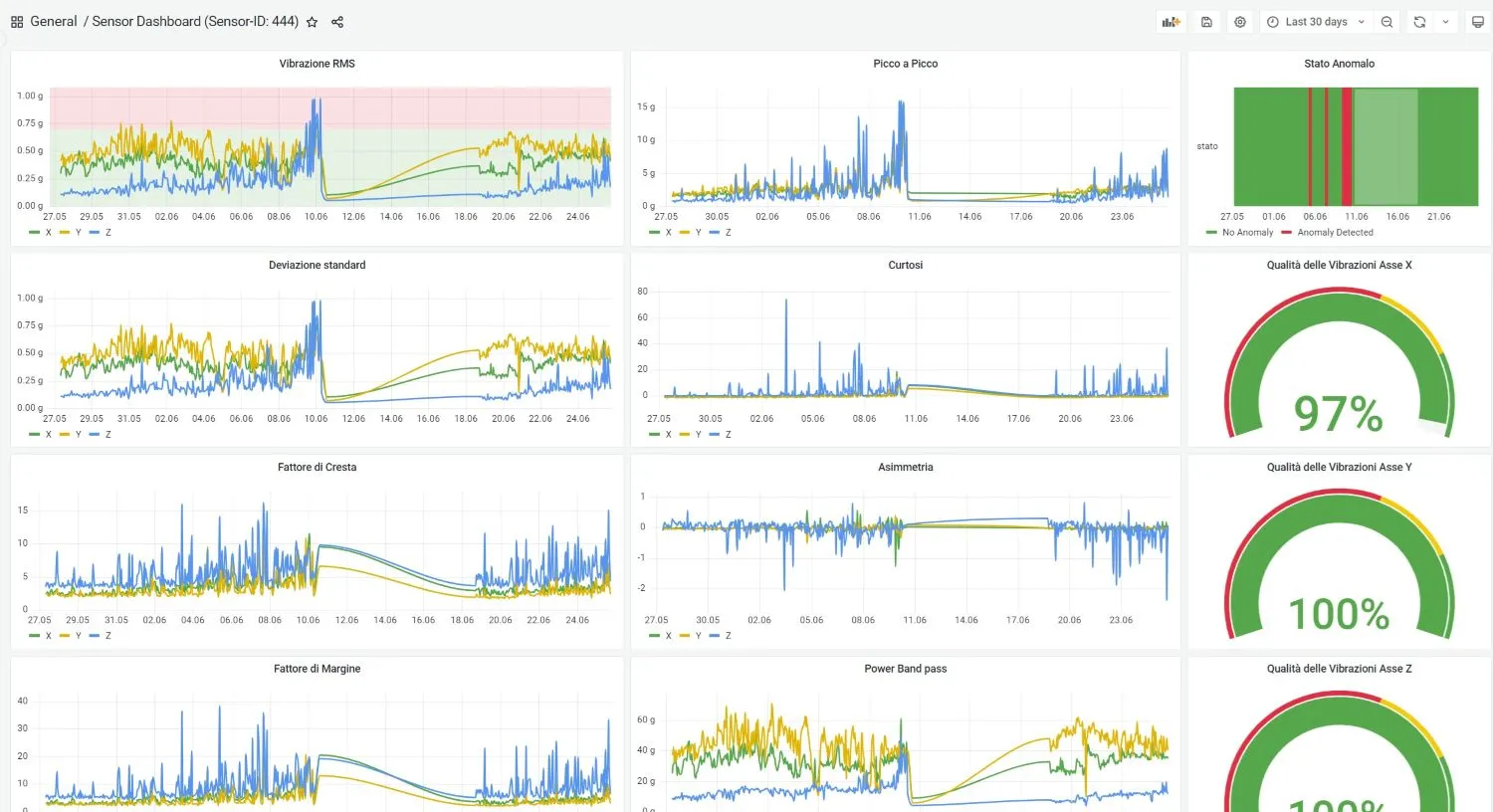
The gateway is equipped with software for analysing the vibration data and includes algorithms for machine learning, anomaly detection and remaining life estimation. The gateway offers two modes for displaying the data: local and remote. On-site, maintenance teams can access real-time graphics and dashboards that provide immediate information on the condition of the motor. In addition, the gateway can send data to the cloud for remote monitoring, long-term archiving and more complex analyses.
“To enable more comprehensive system integration, the gateway supports the MQTT, TCP/IP, UDP and OPC UA communication protocols. This flexibility enables data communication with other devices and systems, thereby allowing seamless integration into existing IoT frameworks and SCADA systems,” says Mehdi Rahmanian, Application Specialist IIoT and Data Scientist at KEB Italia.
Over a period of around one month, the sensors continuously collect data and establish a detailed baseline. This reflects normal operating conditions and serves as a reference to highlight any anomalies. The machine learning in the gateway is trained using this baseline. The algorithm learns the motor’s normal vibration patterns and can distinguish normal operating noise from potential mechanical problems. Once trained, the system becomes operational through data collection and can thereafter predict anomalies.
Wireless vs. wired sensor
When it comes to the necessary sensors, plant and machine manufacturers can choose between wireless and wired models – both variants are supported by NOA. The wired sensors were introduced most recently and are the first choice, particularly when reliable data transmission is required even under harsh environmental conditions or with sensitive equipment. “The wired version of the sensor ensures a continuous, noise-free signal even in extreme heat and under strong vibrations. The result is high data quality – also in areas where there is significant electromagnetic interference,” says Rahmanian. Furthermore, the permanent power supply eliminates the need for battery maintenance that would otherwise be required. The wired version of the sensor really comes into its own, particularly in systems that are permanently installed in one location.
If installation flexibility is a key requirement, users can opt for wireless sensors for vibration analysis. These also detect machine vibrations and help ensure that emerging faults or even machine downtime are detected in good time. Unlike the wired sensors, they are primarily designed for applications operating in less demanding environments. Rahmanian: “Our aim is to meet the different needs of our customers. That is why we offer a range of sensors that ensure the best possible data analysis in each case.” There are also various methods available for installing the sensors. For optimal vibration transmission, they can be attached to the motor using epoxy resin adhesive. However, mounting using an M6 screw or an M8-M6 threaded pin mount is also possible without any issues.