NOA and HELIO are used in these applications
Automation and HMI tools in practical testing
With NOA and HELIO, KEB offers a powerful bundle for modern automation in mechanical engineering. This paves the way for small and medium-sized enterprises in particular to enter the world of industrial IoT. Flexible machine control, smart use, analysis and visualisation of the data generated – all of this is more important today than ever before, and KEB makes it easier than ever. Various use cases show how NOA and HELIO perform in practice – and how users benefit from them in concrete terms.
NOA is the open automation and IIoT platform from KEB Automation that allows users to get more out of machine data and create automation solutions based on open systems in no time at all. Machine and plant downtime is reduced, costs are lowered and efficiency is increased. NOA functions as a hardware-independent automation platform as a service (APaaS) and is based on Linux and container technology. Apps such as machine learning or condition monitoring can be installed easily and flexibly with NOA.
The HELIO HMI management system is also available in NOA. With HELIO, plant and machine builders can quickly and easily create intuitive HMIs that are truly responsive and independent of platforms and end devices thanks to modern web technology. One of the advantages is that no programming knowledge is required to create the HMIs. Developed by certified UX experts, HELIO provides well-designed templates that offer professional interface design right out of the box. To date, both NOA and HELIO have been successfully implemented in various applications.
Use case: Motor tests accelerated by 75 per cent
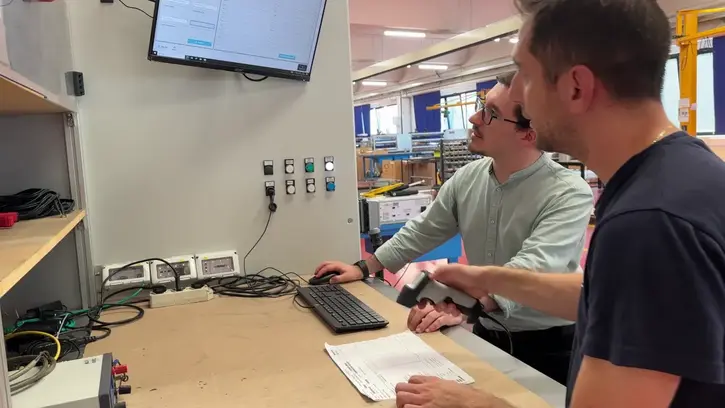
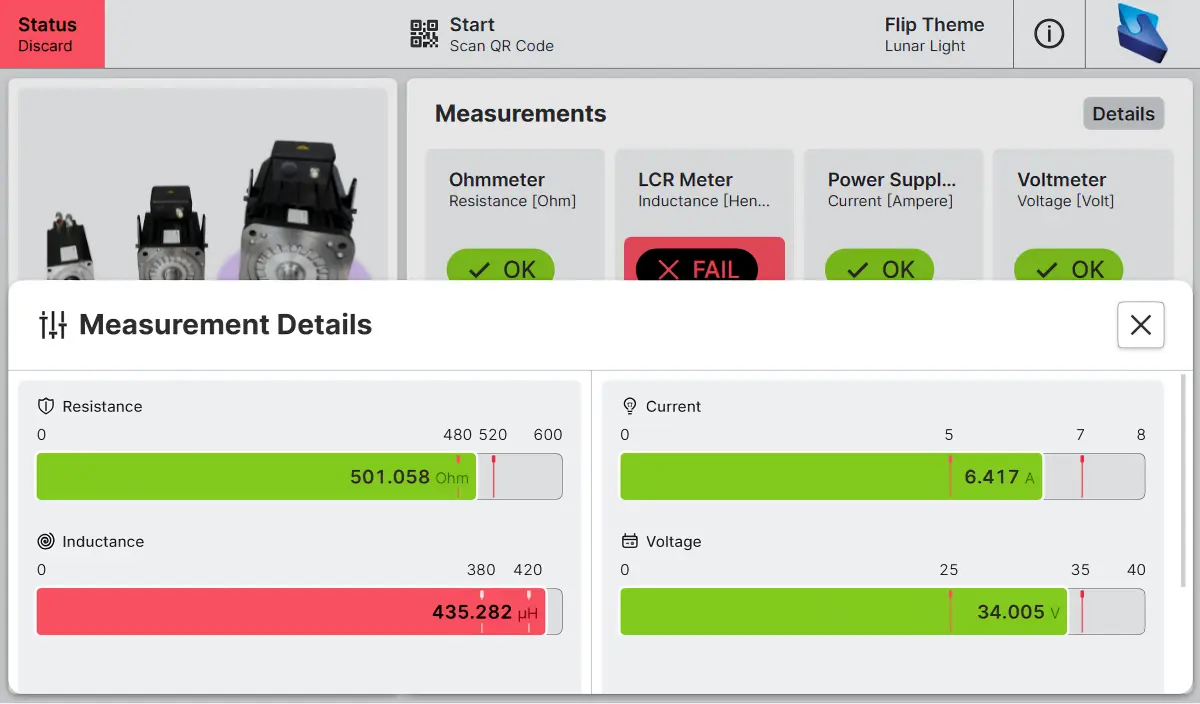
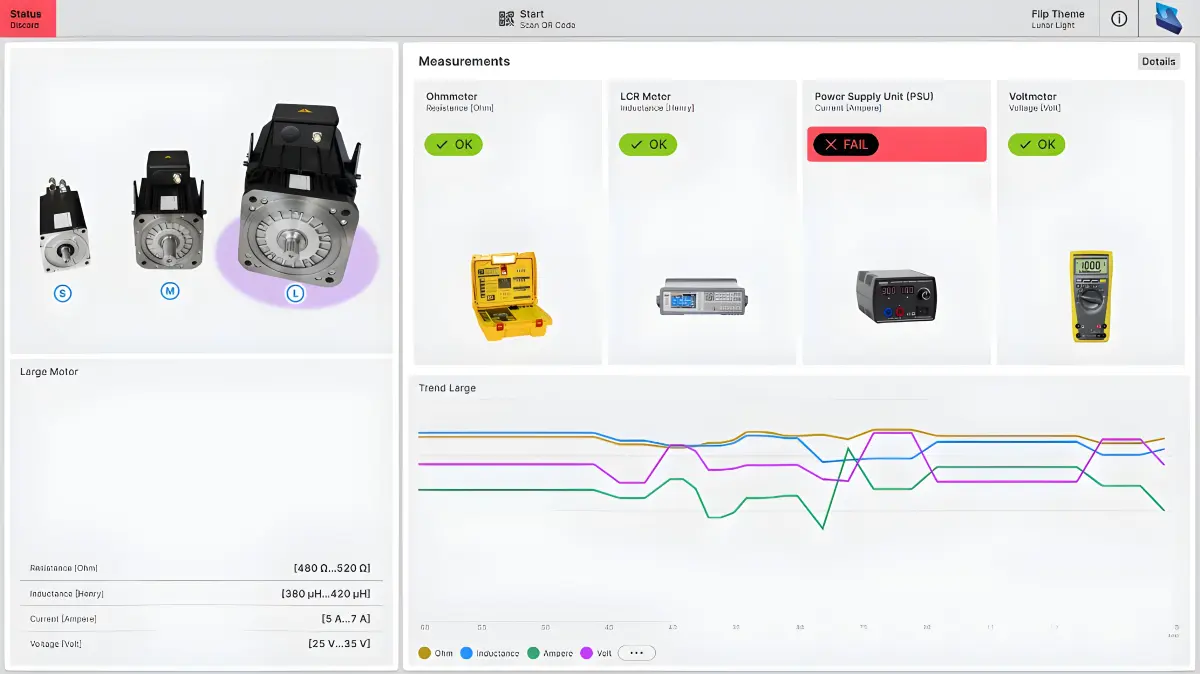
Italian electric motor manufacturer Brusatori has recently started using NOA. The IIoT solution is designed to help optimise quality checks and assembly processes and reduce testing times. Until now, measurements and limit values were checked manually. The goal was to carry out the test at each individual station of the assembly process in the future in order to have fewer defective motors to sort out at the end. In addition, the test time was to be shortened by automating the previous manual comparison of the measured values.
The solution involved installing a setup at each station of the assembly line consisting of a NOA Edge Device – the C6 COMPACT 3 from KEB – which in turn is connected to four measuring devices. Various apps for this application are installed on the Edge Device. Brusatori wrote its own apps for the data connection between the measuring devices and NOA and added them to the customer-specific app catalogue of the automation platform. “By implementing NOA, Brusatori now has an automated system for motor testing and quality control. This has reduced the total testing time from 20 minutes to five minutes,” says data scientist Mehdi Rahmanian from KEB Italia, who implemented NOA at Brusatori. “We have eliminated the bottleneck at the end of the quality inspection process, and defective motors will now be detected and sorted out during the process.”
Use case: Heating control
One application that demonstrates the versatility of HELIO is a wood chip power plant for local heating. Background: More and more village communities and neighbourhood associations are turning to cooperatively organised local heating networks. A small company has set itself the task of implementing heating projects of this kind. To ensure optimum usability of the corresponding heating control system, an HMI was developed with HELIO, which is primarily intended to show the plant operator whether the heating system is functioning properly and what the current demand or consumption is. This also gives the operator the opportunity to conveniently analyse the underlying data and use it to derive optimisations of the services for the respective demand.
“For the implementation, the customer opted for its own panel PC with Linux and used HELIO standalone, i.e. independently of additional software or hardware. All data is connected via OPC UA. In addition, there are more complex visualisations embedded in HELIO,” says Johannes Schäfer, UX Engineer / Product Owner HMI at KEB. ‘The resulting HMI is very clear for operators and provides them with the necessary tools for in-depth analysis.’
Use case: Increased productivity AGVs
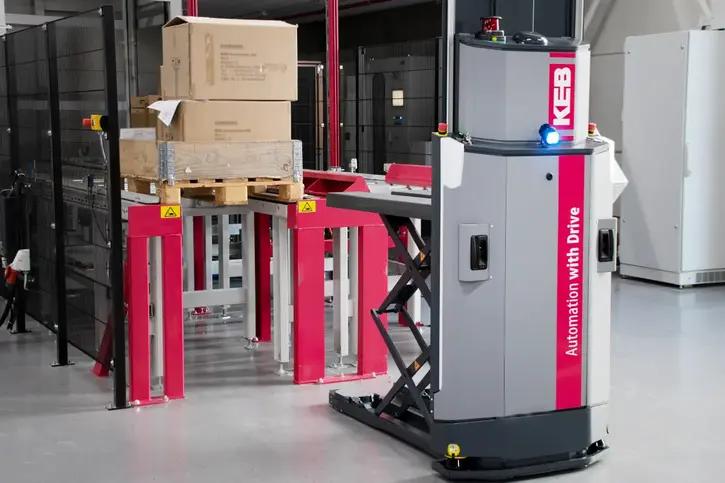
KEB itself also relies on the open automation platform NOA in its in-house production. Under the names ‘Hans’, “Jenny” and ‘Kati’, a total of three automated guided vehicles (AGVs) are in operation in the production halls to transport products and materials from A to B. If, for example, the connection to one of the vehicles is lost and it comes to a standstill as a result, the AGV switches to an error state. In a large production hall, however, it is not always immediately apparent when and where the AGVs have come to a standstill. Against this background, NOA was used to create a way of monitoring the condition of the vehicles. The aim was to display all relevant status information in a central location. “We set up condition monitoring using the NOA App Builder. The AGV data is read out via the NOA Communication Apps and transferred to the NOA Portal, where all the necessary information is ultimately displayed in the central dashboard,” says Daniel Preuß, Product Owner IIoT Platform at KEB.
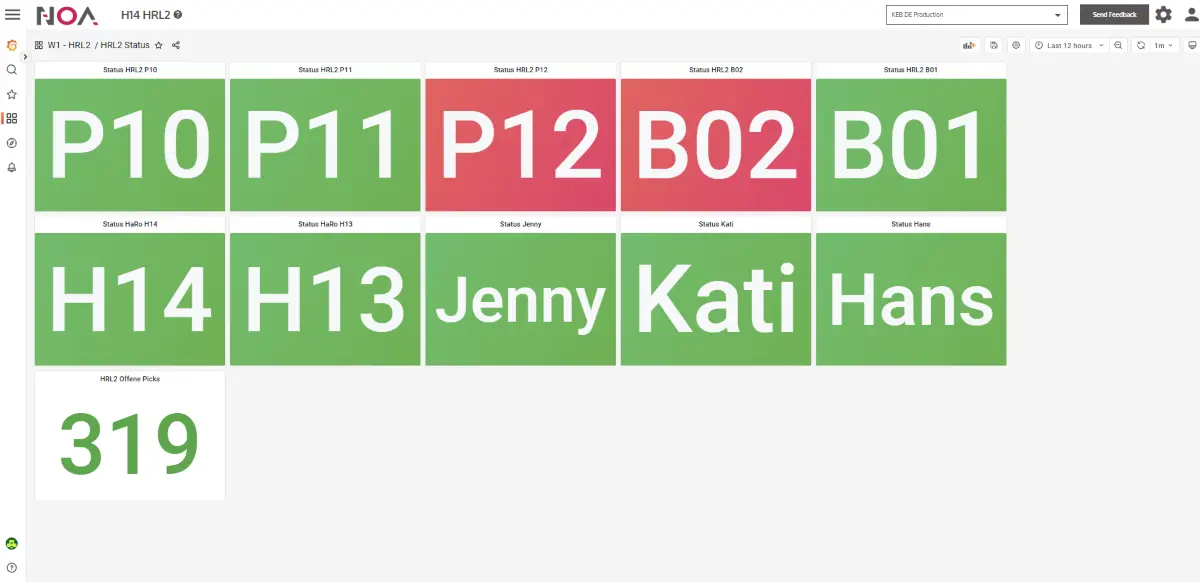
The implementation of the NOA solution will make it possible in future to view the individual status of the AGVs in the cloud. In the event of anomalies or errors, a corresponding warning message is issued by email or MS Teams so that immediate action can be taken and the productivity of the vehicles increased. In addition, the technical requirements are in place to visualise the statuses in HELIO if necessary.
